Project Detail
Japanese Tax Expert System (JTES) – Specialized RAG for Professionals
AI-powered Japanese tax analysis built on official NTA and e-Gov sources, with verifiable citations for every answer.
Executive Summary
Problem
Tax users need dependable guidance for Japanese tax topics where unsupported AI answers can create compliance and operational risk.
Solution
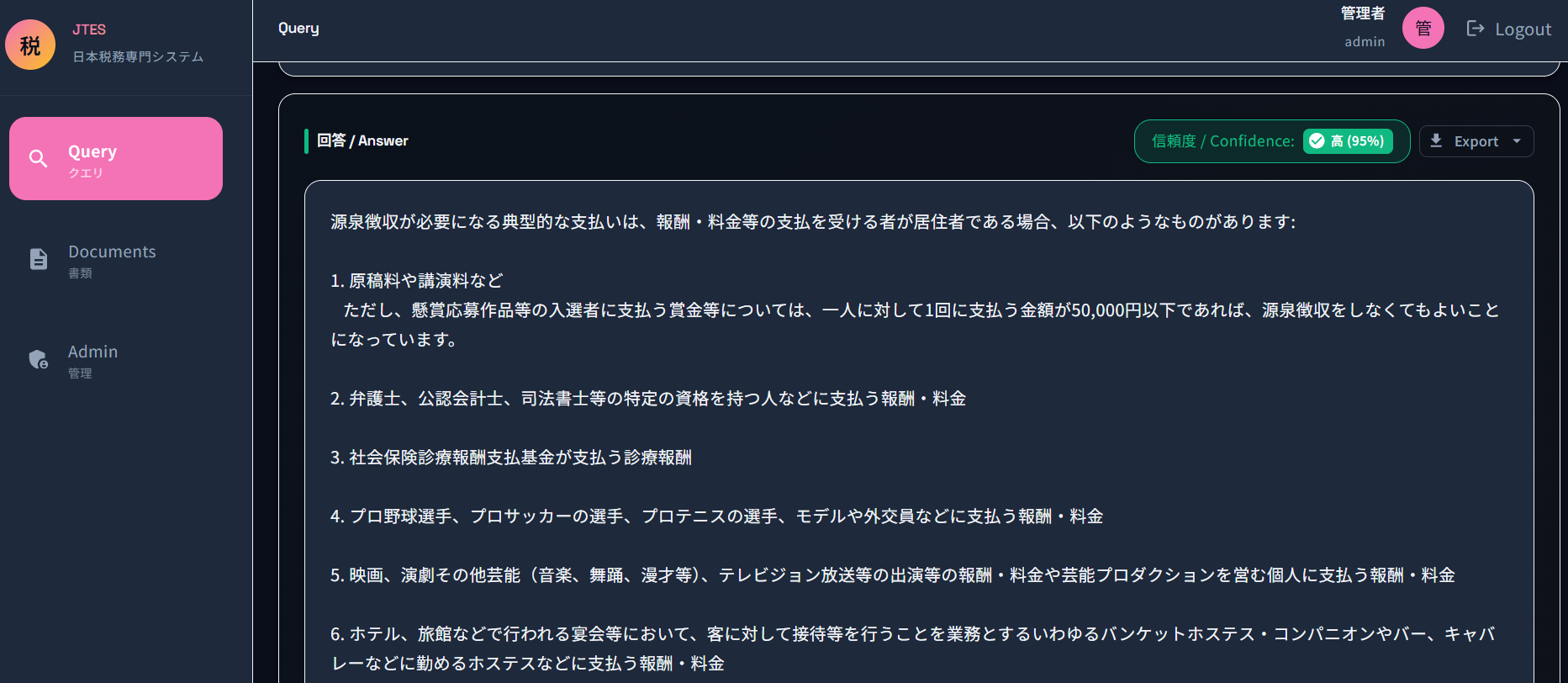
JTES analyzes official 国税庁 (NTA) and e-Gov sources, supports Japanese and English queries, and provides citation-backed answers with fail-closed behavior when evidence cannot be verified.
Outcome
A role-oriented tax AI platform that combines question answering, law-change monitoring, legal comparison workflows, and secure team usage in one system.
Use Case & Stakeholders
JTES supports practical tax workflows from quick Q&A to ongoing regulatory tracking, with every response grounded in official source evidence.
- Sole proprietors (個人事業主)
- Tax professionals (税理士・会計士)
- SMB accounting and finance teams (中小企業)
- Accounting firms managing multiple client environments
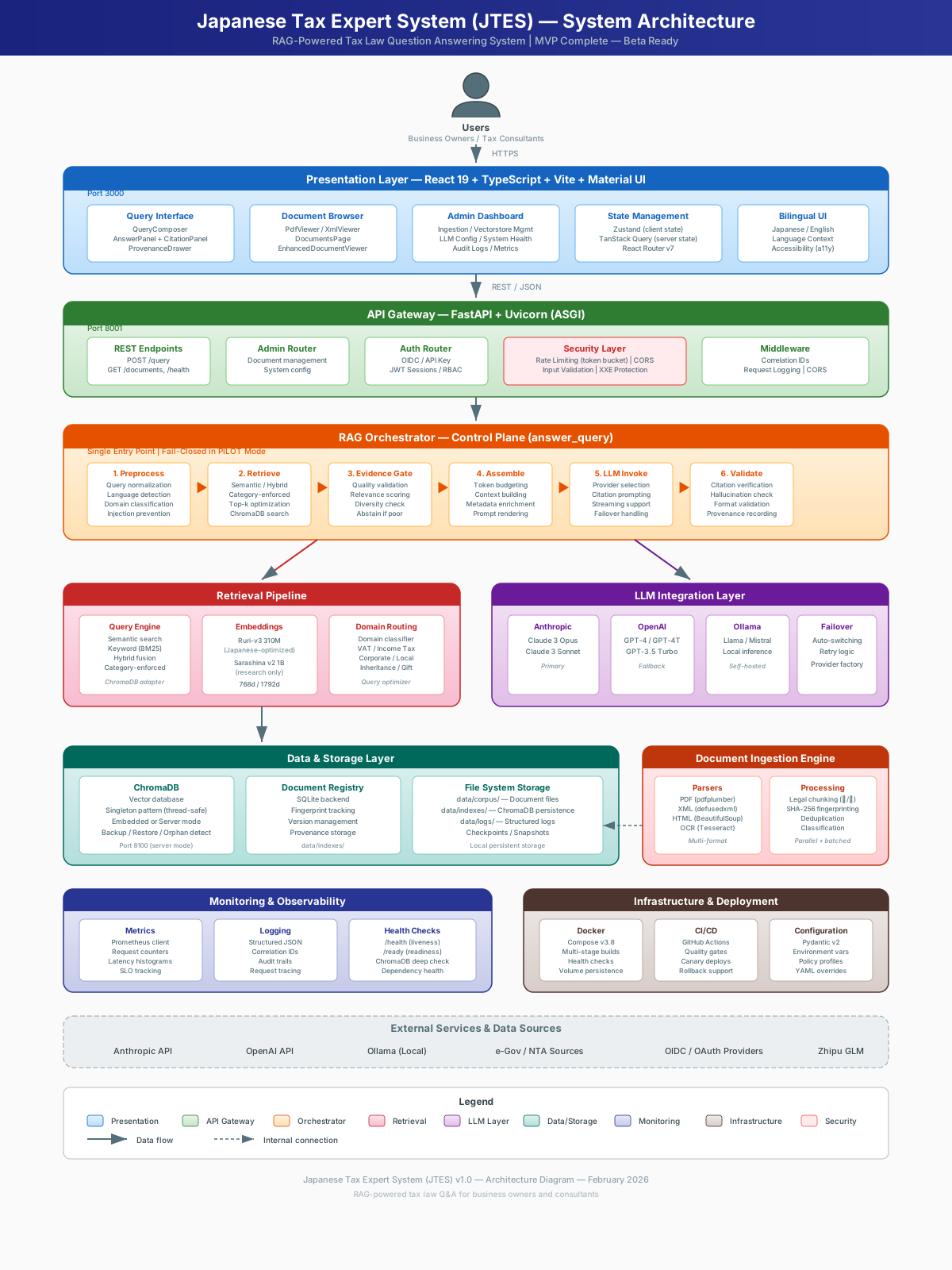
Architecture
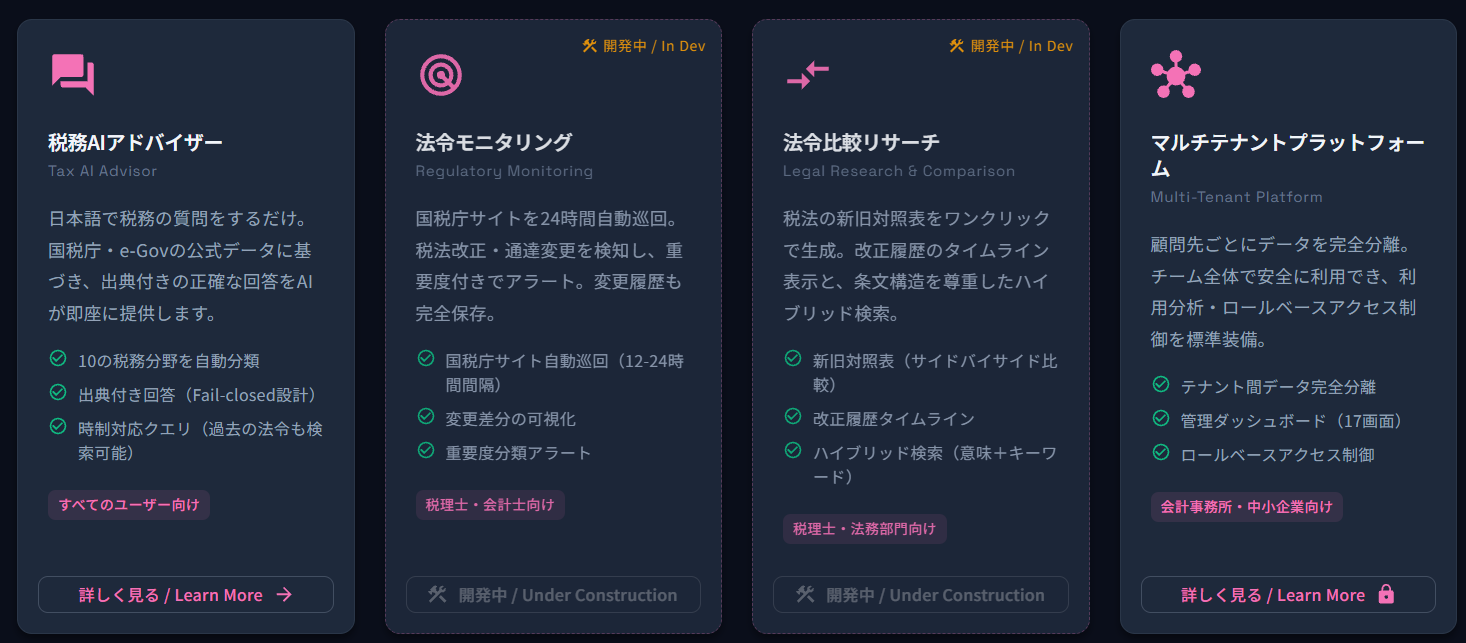
JTES is presented as a product suite centered on citation-backed tax intelligence, combining advisor, monitoring, comparison, and multi-tenant collaboration capabilities.
[Tax AI Advisor / 税務AIアドバイザー] -> [Cited Answers from Official Sources]
[Regulatory Monitoring / 法令モニタリング] -> [Importance-ranked Alerts + Change History]
[Legal Research & Comparison / 法令比較リサーチ] -> [新旧対照表 + Amendment Timeline]
[Multi-Tenant Platform / マルチテナントプラットフォーム] -> [Tenant Isolation + Role-Based Access]
Tech Details
RAG / Prompt Patterns
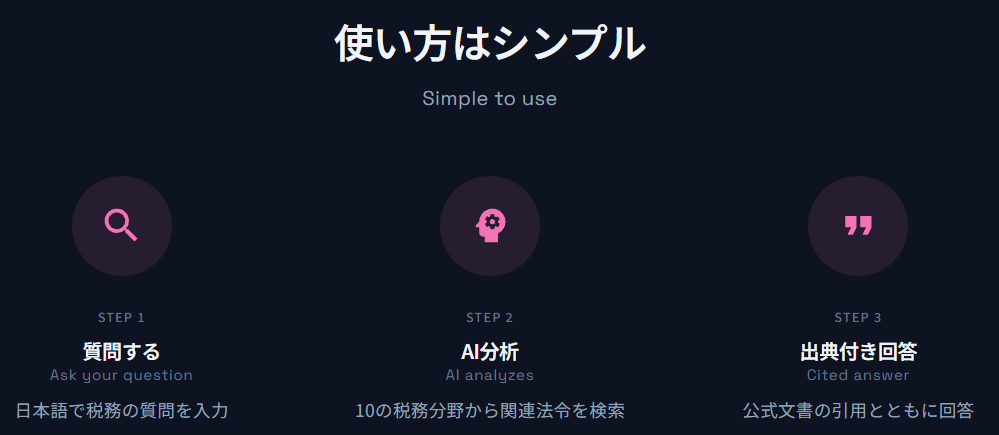
- Ask in Japanese or English; retrieve and synthesize from Japanese official tax/legal sources.
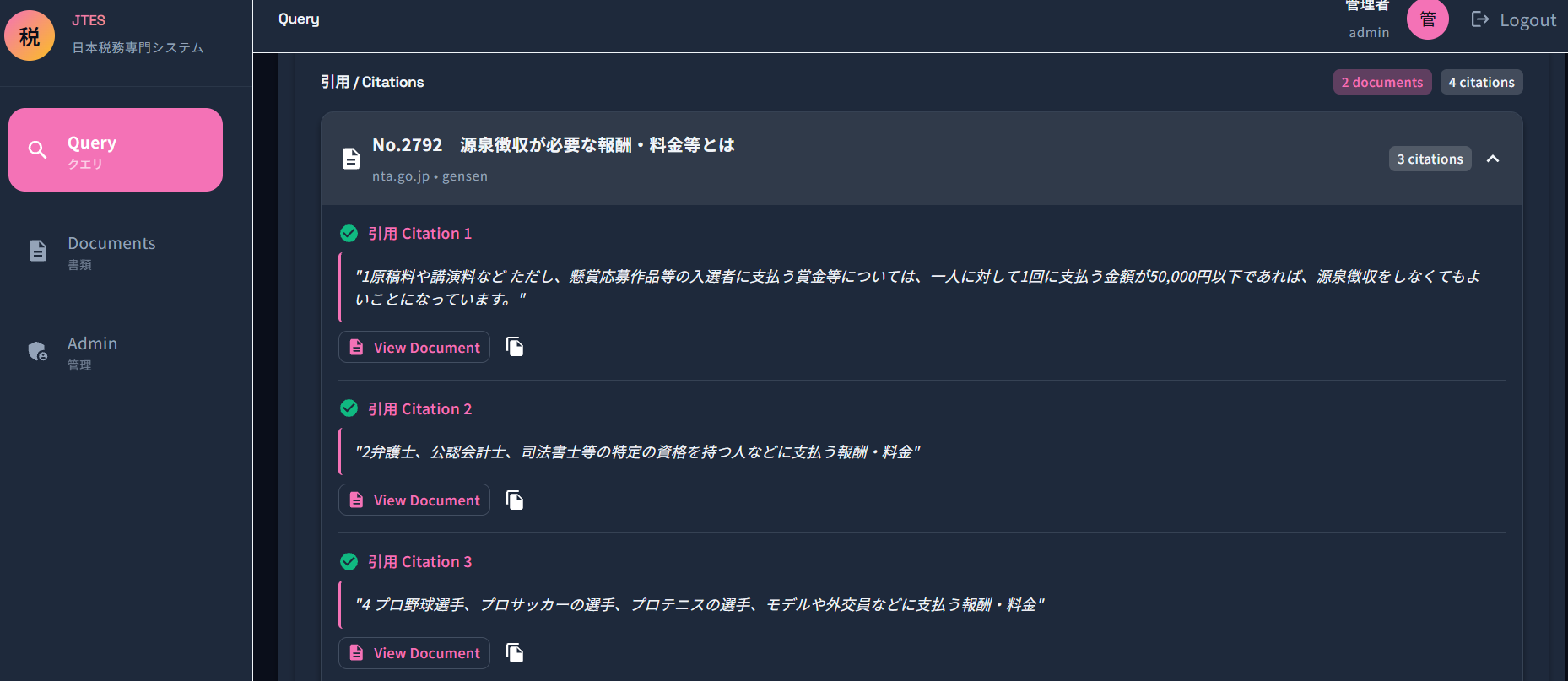
- Return answers with explicit citations tied to official NTA and e-Gov materials.
- Apply fail-closed behavior when citation verification does not pass.
- Support temporal legal research for past laws and regulation changes.
Tools
- Tax AI Advisor (税務AIアドバイザー)
- Regulatory Monitoring (法令モニタリング)
- Legal Research & Comparison (法令比較リサーチ)
- Multi-Tenant Platform (マルチテナントプラットフォーム)
Constraints
- Japanese tax and accounting terminology is preserved to avoid meaning loss from subjective translation.
- Source grounding is limited to official data such as 国税庁 (NTA) and e-Gov.
- Professional use requires conservative behavior when evidence is missing.
- Precision may be higher for Japanese queries because primary laws are authored in Japanese.
Tradeoffs
- Strict citation requirements improve trust but can reduce response coverage.
- Fail-closed behavior reduces speculative risk but may withhold answers when evidence is insufficient.
- Temporal monitoring and comparison features add operational value with added system complexity.
Screenshots Gallery
Lessons Learned / What I'd Improve Next
Lessons Learned
- In tax workflows, citation visibility is a primary trust driver.
- Role-based packaging improves usability across sole proprietors, specialists, and teams.
- Regulatory monitoring and law comparison reduce manual research burden for professionals.
- Enterprise adoption depends on tenant isolation and clear access controls.
What I'd Improve Next
- Expand depth and breadth of official source coverage while preserving citation quality.
- Refine English-query precision for users who do not ask in Japanese.
- Improve alert ranking quality for regulatory monitoring updates.
- Add richer workflow analytics for team-wide tax issue tracking.
Repro Notes / Demo Walkthrough
Non-runnable public demo: use the walkthrough steps below.
- Ask a Japanese or English tax question and review cited official references in the response.
- Validate category coverage across major tax domains (for example 消費税, 所得税, 法人税, 源泉徴収).
- Test regulatory monitoring alerts and law comparison output (新旧対照表).
- Verify role-based access and tenant separation behavior in team scenarios.